How ANPR Is Transforming Traffic Management in Smart Cities
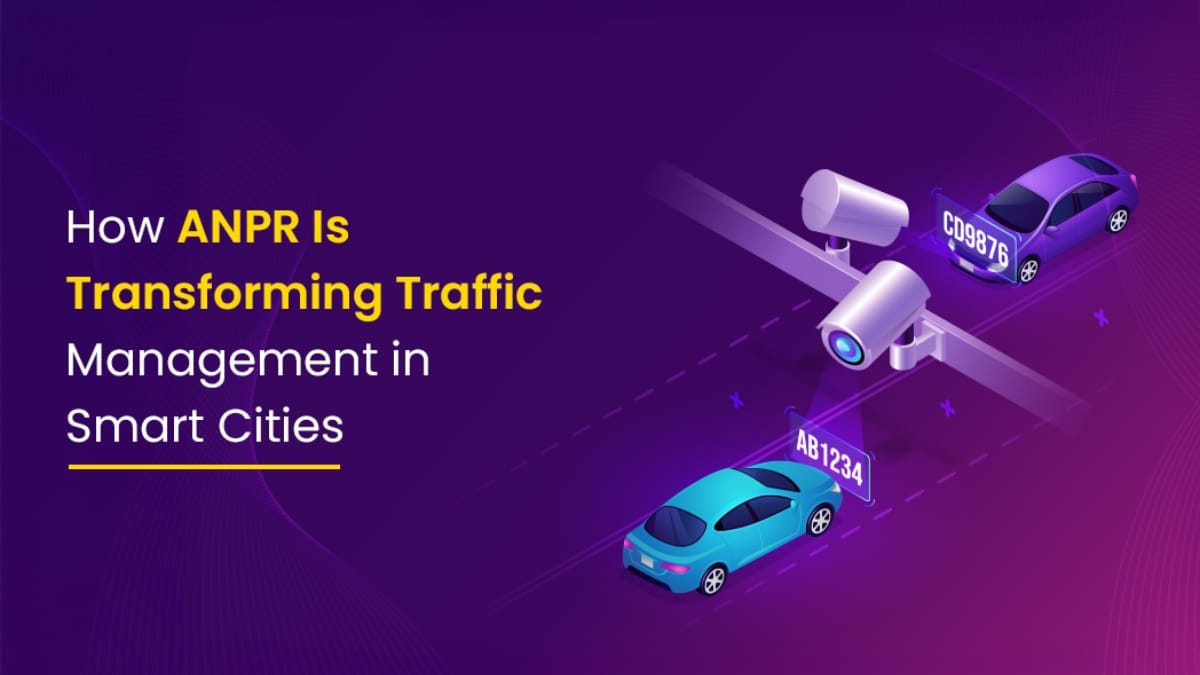
New Delhi [India], January 21: Smart cities are built on a simple promise: make urban life smoother, safer, and more efficient by using technology where it matters most. And few areas need modernisation as urgently as traffic management. Growing vehicle density, unpredictable congestion, road safety concerns, and rising pollution levels have pushed city administrations to look beyond manual monitoring and traditional CCTV-based systems.
This is where ANPR (Automatic Number Plate Recognition) is making a major impact. By automatically reading vehicle number plates through cameras and AI-powered software, ANPR turns everyday traffic into usable, real-time data. For smart cities, that data becomes the foundation for faster enforcement, smarter planning, smoother flow, and better citizen experience.
In this blog, we’ll explore how ANPR is transforming urban traffic management—and why it’s becoming a core capability in modern smart city infrastructure.
What Is ANPR and Why Does It Matter in Smart Cities?
ANPR uses high-quality imaging and intelligent recognition algorithms to detect and read number plates from moving or stationary vehicles. Once captured, the plate data can be matched against databases for enforcement, tolling, access control, or analytics.
In a smart city context, ANPR is valuable because it delivers:
Real-time visibility of vehicle movement
Accurate identification without stopping traffic
Automated enforcement with minimal manpower
Data-driven insights for long-term planning
Instead of relying solely on manual policing or reactive control rooms, cities can shift to proactive traffic governance.
1) Smarter Congestion Monitoring and Traffic Flow Optimization
One of the most visible benefits of ANPR is how it improves congestion management.
By placing ANPR cameras at key junctions, entry points, and high-traffic corridors, cities can track:
Vehicle volume by time and location
Peak congestion windows
Lane-wise flow patterns
Origin–destination movement across zones
This intelligence allows traffic control rooms to make better decisions—such as changing signal timings dynamically, diverting traffic, or identifying bottlenecks that need road redesign.
Over time, ANPR data helps city planners answer questions like:
Which routes are overloaded daily?
Where are recurring choke points?
What is the impact of a new flyover or metro route on traffic?
Instead of assumptions, urban planning becomes measurable.
2) Automated Violation Detection and Enforcement at Scale
Traditional enforcement depends heavily on manual checking and on-ground presence. In busy cities, that approach has limits—violations go unchecked simply because manpower can’t keep up.
ANPR-enabled enforcement changes the equation. It can automatically detect and log violations like:
Over-speeding (when integrated with speed detection)
Red-light jumping (at signal intersections)
Wrong-side driving (based on camera placement and rules)
Unauthorized entry into restricted zones
Stolen or blacklisted vehicles via database matching
Once a violation is detected, the system can trigger an automated challan workflow—reducing delays, improving transparency, and increasing compliance.
For citizens, the biggest shift is consistency: enforcement is no longer based on whether a traffic officer is present. It becomes uniform, evidence-based, and scalable.
3) Efficient Traffic Policing with Hotlist Alerts
ANPR becomes especially powerful when connected to centralized databases (RTO, police, crime records, etc.). With “hotlists” configured, the system can instantly flag vehicles associated with:
Theft reports
Outstanding warrants
Repeat offenders
Unregistered vehicles
Vehicles involved in incidents
The benefit is speed. Instead of checking plates manually, authorities can receive real-time alerts in control rooms or on mobile devices, enabling quicker interception and faster response.
This shifts policing from reactive investigation to proactive detection—an important step in building safer cities.
4) Data-Driven Urban Mobility Planning
Smart cities need reliable mobility data to plan better infrastructure—whether it’s new roads, public transit integration, or parking zones.
ANPR supports long-term planning by generating actionable analytics such as:
Traffic density trends over months/years
Commercial vs private vehicle patterns
Inter-city vehicle movement
Impact of events, festivals, or construction work on traffic flow
Vehicle mix (two-wheelers, cars, trucks) by corridor
This helps administrations allocate budgets and resources where the need is real. For example:
If heavy vehicles dominate a corridor at night, the city can design freight-friendly routes.
If a particular zone receives high inflow during office hours, public transit and signal optimization can be prioritized there.
The result: better infrastructure decisions and fewer “trial-and-error” interventions.
5) Cleaner Cities Through Emission and Zone Management
Traffic congestion isn’t just an inconvenience—it’s also a major contributor to urban air pollution. ANPR can assist cities in implementing cleaner mobility initiatives, such as:
Low-emission zones (restricting high-polluting vehicles)
Odd-even enforcement
Commercial vehicle time restrictions
Vehicle fitness compliance checks
With ANPR, rule enforcement becomes practical without creating longer queues or requiring manual checkpoints.
In many smart city roadmaps, environmental goals are as important as mobility goals. ANPR supports both.
6) Improved Parking and Roadside Management
Illegal parking and poor curbside control can disrupt traffic as much as congestion itself. ANPR helps streamline parking operations by enabling:
Automated entry/exit logging
Ticketless parking in public or private lots
Identification of overstays or unpaid parking
Better utilization insights across parking zones
When paired with smart parking systems, ANPR reduces friction for drivers and improves revenue collection for civic bodies—without requiring heavy manpower at every location.
7) Faster Incident Investigation and Better Accountability
When an incident happens—hit-and-run, theft, traffic accidents—time is critical. ANPR creates an audit trail of vehicle movement that helps in:
Tracking suspect vehicles across multiple locations
Establishing timelines based on sightings
Supporting investigations with evidence logs
Reducing dependence on manual CCTV review
This improves accountability and strengthens legal cases with verified data.
Why Implementation Quality Matters
While ANPR is a powerful technology, results depend on implementation quality. Factors like camera placement, night performance, plate design variations, vehicle speed, weather, and system integration directly affect accuracy.
That’s why cities often partner with experienced technology providers who understand real-world challenges and can deliver reliable performance at scale.
Companies like Vehant work in the broader intelligent traffic and security ecosystem, helping organizations adopt advanced vision-based solutions in a practical, deployment-ready manner. When ANPR is implemented with the right hardware, software intelligence, and integration layer, it becomes a long-term asset rather than a short-term pilot.
The Future of ANPR in Smart City Traffic Management
ANPR is evolving quickly, especially with AI and edge computing. In the near future, smart cities can expect:
Real-time analytics at the edge (faster decisions, lower bandwidth load)
More accurate recognition in low light and high speed
Deeper integration with command-and-control centers
Unified dashboards combining ANPR, CCTV, traffic sensors, and emergency response
Ultimately, ANPR is not just about reading number plates—it’s about building a data-driven traffic ecosystem where cities can predict, prevent, and optimize rather than only react.
Final Thoughts
Traffic is one of the most complex challenges smart cities face—but it’s also one of the most solvable with the right mix of technology and policy. ANPR provides the missing link between visibility and action: it turns road movement into structured data that can be used for enforcement, planning, safety, and sustainability.
For city administrations aiming to reduce congestion, improve compliance, and create a smoother daily experience for citizens, ANPR is no longer optional—it’s becoming foundational.
If you have any objection to this press release content, kindly contact [email protected] to notify us. We will respond and rectify the situation in the next 24 hours.