Jindal Steel Tubes Ltd Pushes JSTL Premium TMT Bars Positioning with “Test Before Trust” Model in India’s Steel Distribution Market
New Delhi [India], May 20: India’s steel and construction materials market is steadily moving toward a more structured and verification-driven ecosystem, where quality assurance and transparency are beginning to play a more decisive role in procurement decisions.
In this evolving landscape, Jindal Steel Tubes Limited is reinforcing the positioning of its JSTL Premium TMT Bars, supported by a distribution and market framework built around the principle of “Test Before Trust.”
Rather than relying solely on traditional certificates or price negotiations, the brand is being positioned around direct verification, traceable quality systems, and structured engagement with buyers and channel partners.
Industry observers say this reflects a broader shift in the steel sector, where fragmented distribution models are slowly giving way to more organized and experience-led brand ecosystems.
At the core of the JSTL positioning is a clear intent: steel should not only be supplied, but also demonstrated and verified before procurement decisions are made.
The JSTL Premium TMT Bars framework focuses on three key elements — consistent batch-level testing, transparent and standardized pricing, and improved visibility of product quality through traceability systems. Together, these are intended to strengthen confidence in material performance at the point of purchase.
Legacy Product Portfolio and Expansion Base
Before the focused positioning of JSTL Premium TMT Bars, Jindal Steel Tubes Limited has been associated with a broader steel and infrastructure product portfolio catering to multiple construction and industrial requirements.
The company’s traditional product ecosystem includes a range of steel-based solutions such as structural steel components, steel tubes and pipes, and reinforcement-related material categories used across infrastructure, housing, and industrial applications.
This established portfolio has contributed to its presence in the market over time, serving as the foundational base upon which the JSTL Premium TMT Bars positioning is now being structured.
The current strategy does not replace this legacy product line but instead builds a more defined, experience-led identity for reinforcement steel within the larger product ecosystem.
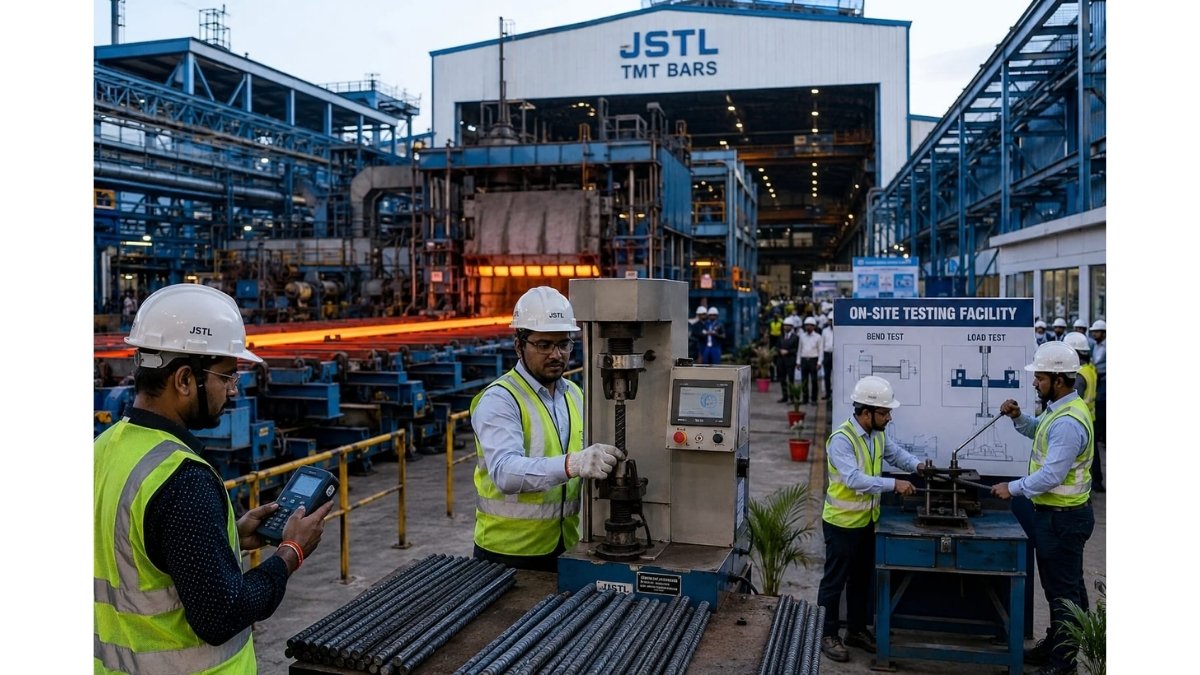
A key highlight of the initiative is the emphasis on verification-led procurement. Under the “Test Before Trust” approach, buyers are encouraged to evaluate material performance through structured testing mechanisms rather than depending solely on documentation.
This includes QR-based traceability for batches, controlled access to quality data before dispatch, and opportunities for physical testing at designated facilities. The idea is to make verification a practical part of the buying process rather than a post-purchase assurance.
JSTL is also developing a network of Brand Experience Centres, designed to bring material evaluation closer to end users. At these centres, engineers, contractors, and institutional buyers can witness live testing of TMT bars, including bend and strength demonstrations, alongside comparative material assessments.
The centres are intended to function as both technical and experiential spaces, where procurement decisions are supported by direct observation and measurable performance data.
On the distribution side, the company is working with a structured framework defined as “One Territory – One Partner – One Price.” Under this model, each territory is assigned a single authorized channel partner, pricing is kept uniform within defined regions, and intra-brand competition within the same geography is restricted.
The objective, according to industry participants, is to reduce pricing inconsistencies and create more predictable and stable channel operations in a market that has traditionally been highly fragmented.
The pricing system itself is designed to remove ambiguity at the point of sale. A single declared FOR (Freight on Road) price is maintained per category, with logistics and loading included in the base structure and no hidden post-invoice adjustments. This approach aims to ensure that the price communicated at the beginning of the transaction remains consistent through to final billing.
For channel partners, the model emphasizes stability and structure over short-term competition. Defined territorial exclusivity and centralized pricing governance are intended to create a more predictable operating environment and reduce internal channel conflicts.
Industry analysts note that such models are emerging at a time when India’s infrastructure sector is placing greater importance on traceability, standardized quality systems, and direct product validation. However, they also point out that the success of such frameworks will depend on consistent execution across diverse regional markets.
Commenting on the initiative, Avinash Bhatt, associated with JSTL ecosystem strategy, said the intention is to move beyond conventional practices and build a system where procurement decisions are driven by measurable evidence rather than assumption.
He added that the combination of structured distribution, experience-led engagement, and live testing systems is expected to gradually reshape how buyers evaluate steel products.
Overall, the JSTL Premium TMT Bars initiative reflects a broader attempt to redefine the positioning of reinforcement steel in India — not just as a commodity, but as a verified and demonstrable engineering material.
With its focus on structured distribution, transparent pricing, legacy steel manufacturing strength, and the “Test Before Trust” philosophy, the model aligns with an industry trend that increasingly values accountability, traceability, and real-world validation over traditional trust-based procurement systems.
If you object to the content of this press release, please notify us at [email protected]. We will respond and rectify the situation within 24 hours.