
How Researcher Varun Gupta Is Building GrahRahasya Decoded Into One of India’s Most Research-Driven Mahabharata Podcast Platforms
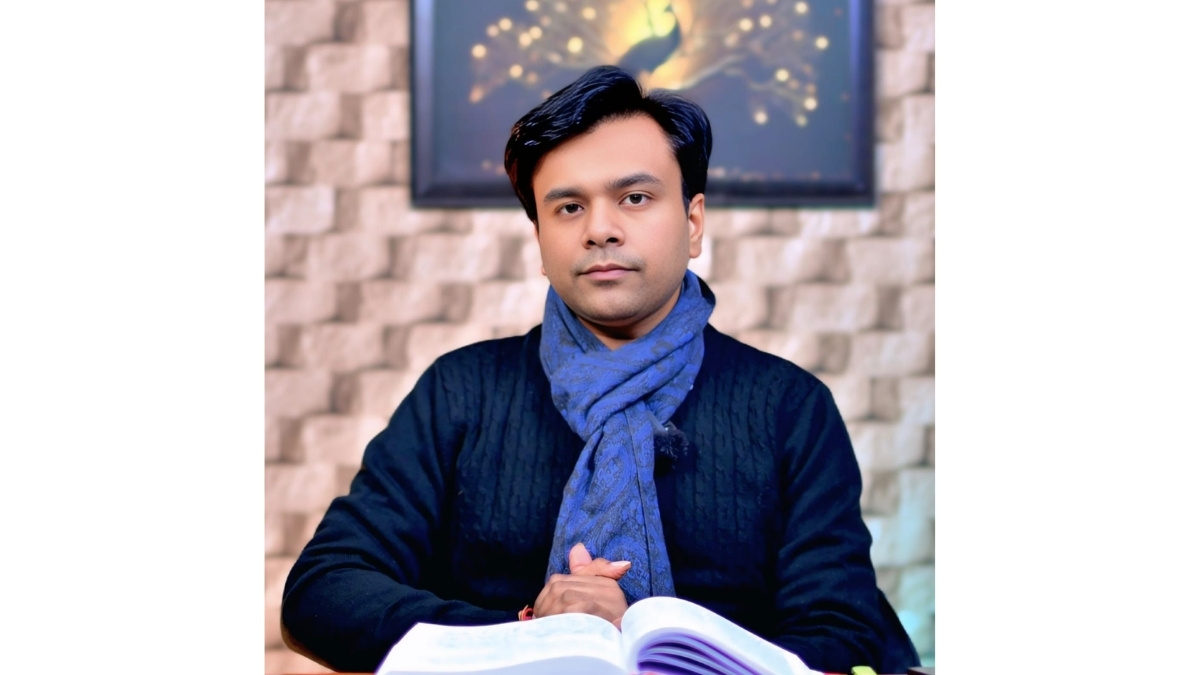
New Delhi [India], June 10: The digital revolution has transformed the way people consume knowledge. Complex subjects that once required access to libraries, universities, or specialist communities can now be explored through podcasts, long-form video discussions, and digital learning platforms. This shift has created new opportunities for the study of India’s epic traditions, particularly the Mahabharata.
Yet this transformation has also produced a challenge.
As mythology content becomes increasingly popular, discussions often prioritize speed over depth, certainty over inquiry, and entertainment over evidence. Complex literary traditions are frequently reduced to simplified narratives designed for short-form consumption.
Against this backdrop, a new generation of research-driven platforms is emerging. Among them is GrahRahasya Decoded, founded by Mahabharata researcher Varun Gupta.
Unlike many mythology channels that focus primarily on retelling familiar stories, GrahRahasya Decoded has developed a distinct identity centered on evidence, textual analysis, comparative traditions, and long-form discussion.
Its goal is not merely to narrate the Mahabharata.
Its goal is to investigate it.
The Rise of Long-Form Mahabharata Discussions
The Mahabharata is often described as the world’s longest epic.
Containing hundreds of characters, multiple philosophical traditions, political debates, ethical dilemmas, military campaigns, and literary layers accumulated across centuries, it cannot easily be compressed into short explanations.
Many of the epic’s most important questions resist simple answers:
●Was Karna primarily a tragic hero or a participant in adharma?
●What role did Krishna play in shaping the outcome of the war?
●How should Bhishma’s silence in the dice hall be interpreted?
●What do different traditions say about Virat Yuddha?
●How do regional retellings reshape familiar narratives?
These questions require time.
They require context.
They require sources.
Recognizing this reality, GrahRahasya Decoded has embraced long-form discussions as its primary format.
Rather than reducing complex debates to a few minutes, episodes often explore subjects in significant depth, allowing evidence, counterarguments, and alternative interpretations to be examined carefully.
Moving Beyond Mythology Entertainment
One of the defining characteristics of the platform is its distinction between mythology entertainment and research-driven discussion.
Entertainment content serves an important purpose. It introduces audiences to epic narratives and keeps cultural traditions alive.
However, research requires a different approach.
For Gupta, the starting point of any serious discussion is not opinion but evidence.
This evidence may come from:
●Primary texts
●Critical editions
●Classical Sanskrit literature
●Regional traditions
●Comparative sources
●Historical commentary
●Literary analysis
Instead of asking, “What do people commonly believe?”
The platform often asks:
“What do the sources actually say?”
This seemingly simple shift changes the nature of the conversation.
Building a Brand Around Evidence
In a digital environment where sensational claims frequently attract attention, building a brand around evidence presents unique challenges.
Evidence is slower.
Research is more demanding.
Nuance often attracts fewer clicks than certainty.
Yet GrahRahasya Decoded has chosen precisely this path.
The platform’s broader philosophy can be summarized through a principle that appears repeatedly across its content:
Facts before conclusions.
Rather than beginning with predetermined narratives, discussions typically begin with textual evidence and proceed from there.
This approach has helped establish the platform’s identity within a growing community of viewers interested in serious engagement with the Mahabharata.
Karna as a Case Study
Among all subjects discussed on the channel, Karna occupies a particularly important position.
Few Mahabharata characters generate more disagreement.
Some readers view him as the epic’s greatest tragic hero.
Others emphasize his alliance with Duryodhana.
Still others focus on questions of social exclusion, loyalty, gratitude, and personal destiny.
Instead of promoting a single interpretation, GrahRahasya Decoded frequently examines how different traditions understand Karna.
Topics explored include:
●The Krishna-Karna dialogue
●The Kavacha-Kundala episode
●Kunti’s meeting with Karna
●Karna’s military campaigns
●Virat Yuddha
●Ghatotkacha’s death
●Day 17 of Kurukshetra
●Comparative traditions surrounding Karna’s downfall
By examining multiple perspectives, the platform encourages audiences to engage with complexity rather than ideological certainty.
Bringing Comparative Mahabharata Studies to Public Audiences
One of the most distinctive contributions of GrahRahasya Decoded is its emphasis on comparative Mahabharata studies.
Most audiences encounter only one version of the epic.
Comparative research reveals that multiple traditions coexist.
These traditions include:
●Sanskrit recensions
●Regional retellings
●Classical dramas
●Vernacular adaptations
●Folk narratives
●International Mahabharata traditions
Each preserves unique insights.
Each highlights different aspects of the story.
According to Gupta, understanding these variations is essential for appreciating the richness of India’s epic heritage.
The platform therefore treats differences not as problems to be eliminated but as opportunities for deeper understanding.
Field Research and Cultural Geography
Another distinguishing feature of GrahRahasya Decoded is its willingness to move beyond the studio.
The Mahabharata is not merely a literary text.
It is also a living cultural landscape.
Across India, numerous locations remain associated with events, characters, and traditions connected to the epic.
Field visits and on-location discussions help connect textual narratives with cultural memory.
These explorations provide audiences with a broader understanding of how the Mahabharata continues to shape regional identities and local traditions.
By combining textual analysis with field engagement, the platform creates a more holistic approach to epic studies.
The Importance of Research Ethics
An increasingly important issue in digital knowledge ecosystems is research ethics.
The speed of online communication often encourages the spread of unsupported claims.
Quotes are misattributed.
Narratives are simplified.
Secondary interpretations are presented as primary evidence.
Gupta argues that researchers have a responsibility to maintain transparency regarding sources and methodology.
This commitment is reflected in the platform’s emphasis on:
●Source identification
●Comparative analysis
●Documentation
●Verification
●Open discussion
The objective is not merely accuracy.
It is intellectual honesty.
Podcasting as Public Scholarship
Historically, scholarship and public communication often existed in separate worlds.
Academic research remained confined to specialist audiences.
Public discussions frequently lacked scholarly depth.
Podcasting has begun to bridge this divide.
Long-form audio and video formats allow researchers to present sophisticated ideas without sacrificing accessibility.
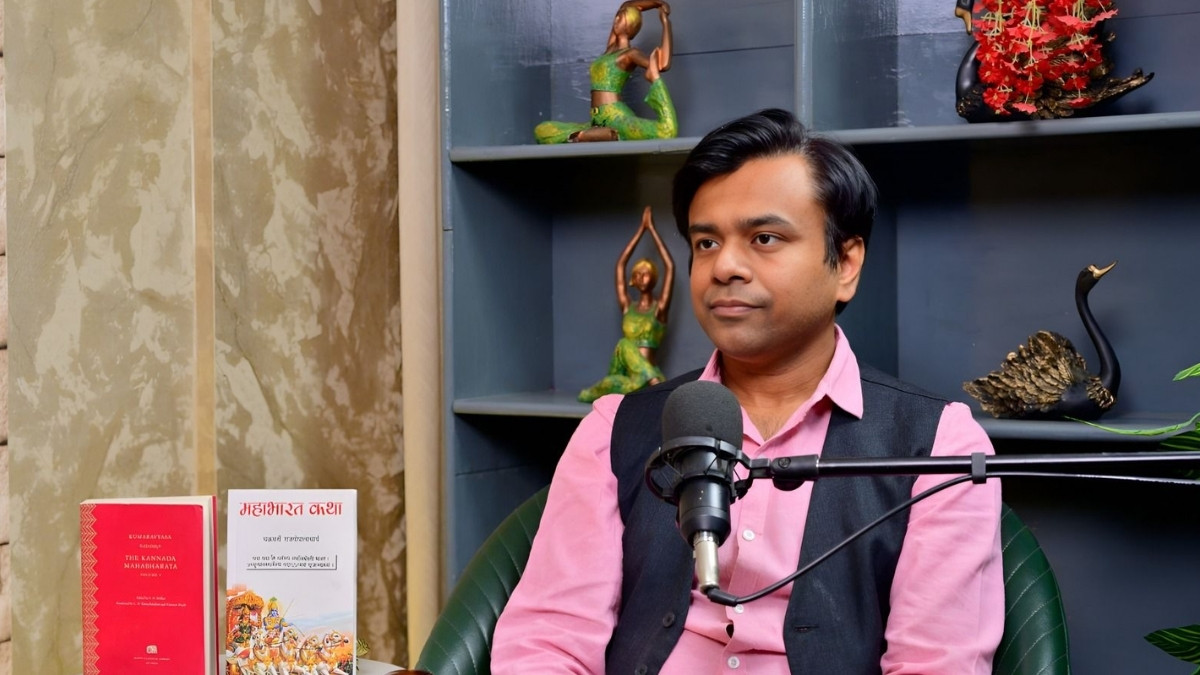
GrahRahasya Decoded represents part of this emerging movement.
The platform demonstrates that rigorous discussion can coexist with broad public engagement.
Complex subjects need not remain inaccessible.
At the same time, accessibility need not require oversimplification.
The Future of Mahabharata Podcasting
Interest in the Mahabharata continues to expand both within India and internationally.
As audiences seek deeper engagement, demand for research-driven content is likely to grow.
This creates opportunities for platforms capable of combining scholarship, storytelling, and digital communication.
According to Gupta, the future of Mahabharata studies will depend not only on academic institutions but also on independent researchers, creators, and educators who can make complex material accessible to wider audiences.
The challenge is maintaining rigor while expanding reach.
The opportunity is enormous.
Conclusion
In an age dominated by short-form content and rapid consumption, GrahRahasya Decoded represents a different model.
It is a platform built around questions rather than slogans.
Evidence rather than assumptions.
Inquiry rather than certainty.
Through podcasts, comparative studies, field discussions, and source-based investigations, Varun Gupta is helping create a new space for serious engagement with one of humanity’s greatest literary traditions.
As the Mahabharata continues to inspire new generations of readers and listeners, research-driven platforms such as GrahRahasya Decoded are demonstrating that intellectual depth and public accessibility need not be opposing goals.
Indeed, they may be strongest when they work together.
YouTube Channel:https://www.youtube.com/@GrahRahasyaDecoded
If you object to the content of this press release, please notify us at [email protected]. We will respond and rectify the situation within 24 hours.